
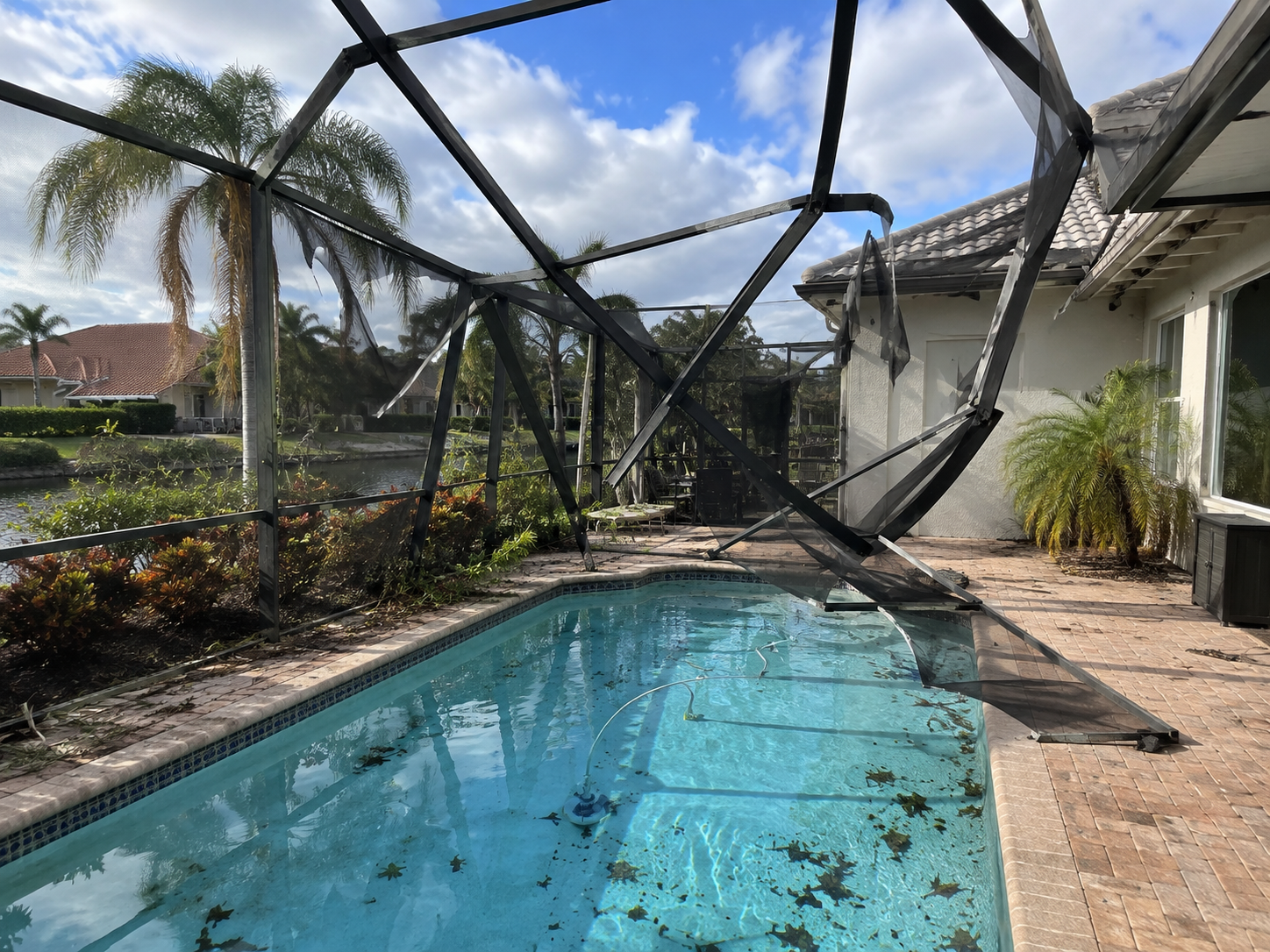
A storm rolls through, and the next morning half your screen enclosure is sitting in the pool. If you live anywhere between Venice and Sarasota, you already know this scene. Sunseeker Pool & Spa has walked homeowners through pool cage and lanai rebuilds after nearly every major storm season, and the damage almost always looks worse than the actual fix turns out to be.
A collapsed pool cage feels like a disaster when you are staring at bent aluminum and torn screening. However, most rebuilds are more straightforward than homeowners expect once you understand what actually needs replacing versus what can be salvaged.
What Hurricane Winds Actually Do to a Pool Enclosure
Wind does not usually destroy a whole cage evenly. It finds the weakest connection point, whether that is a corner footer, a screen panel, or a roof beam, and it fails there first. Once one section gives way, the rest of the structure loses the bracing it was relying on, and that is when a partial failure turns into a full collapse.
Charlotte County and southern Sarasota County properties tend to see the worst of it because of how open some lots are near the water. As a result, older cages built before updated wind codes often fail in storms that newer, code-compliant structures survive without much damage at all.
Common Damage Patterns We See After a Storm
Not every damaged cage needs a full teardown. The type of damage tells you a lot about the scope of the repair:
- Torn or missing screens with the frame intact usually means a re-screen job, not a rebuild
- Bent or snapped support beams typically require replacing that section of framing
- Footer separation from the concrete deck is a structural issue that needs engineering review
- Full roof panel loss often means the whole top structure needs rebuilding, even if the walls held
Getting an accurate read on which category your damage falls into is the first step, and it is why we always start with an in-person inspection rather than guessing from photos.
Why You Should Not Wait to Assess the Damage
Florida humidity does not pause for insurance paperwork. A screen enclosure that is even partially compromised lets debris, standing water, and pests into your pool area, and that can create secondary problems fast.
A pool sitting exposed after a storm collects leaves, dirt, and organic debris at a much faster rate than a screened one, which throws off your chemical balance and can stain plaster or pavers if it sits too long. Getting a tarp or temporary cover on an open enclosure buys you time, but it is not a substitute for a real assessment.
Insurance Timing Matters
Most homeowners policies in Sarasota, Manatee, and Charlotte counties have specific windows for filing storm damage claims. Waiting too long to document the damage can complicate your claim, even if the damage itself is covered.
We recommend photographing everything before any cleanup begins, then getting a professional inspection on record as early as possible. This gives your adjuster something concrete to work from instead of relying on a verbal description weeks after the fact.
The Rebuild Process, Step by Step
Every rebuild starts with removing what cannot be salvaged. That usually means stripping torn screening first, since it is the fastest way to see the actual condition of the frame underneath.
- Structural assessment of every beam, footer, and connection point
- Removal of damaged framing that cannot be safely reinforced
- Reinstallation or replacement of footers, especially where separation occurred
- Framing rebuild to current Florida wind load codes for your zone
- Screen installation, typically using a higher-durability mesh than what was originally installed
- Final inspection to confirm the structure meets code before final approval
Building back to current code is not optional in most of these counties, and honestly, it is the right move even where it is not strictly required. A lot of the cages that failed in recent storms were built under older, less demanding wind standards.
Material Choices That Hold Up Better Next Time
Homeowners rebuilding after storm damage have a real opportunity to upgrade, not just replace. A few choices that make a meaningful difference:
- Heavier gauge aluminum framing rated for higher wind loads
- No-see-um mesh or hurricane-rated screening that resists tearing under wind pressure
- Reinforced corner brackets at the points most likely to fail first
- Properly sized footers anchored to current engineering specs rather than the original build
None of these additions dramatically change the look of your lanai, but they change how it performs the next time a storm comes through.
What a Rebuild Typically Costs and How Long It Takes
Cost depends heavily on scope. A re-screen with minor frame repair is a fraction of the cost and time of a full teardown and rebuild. Most partial rebuilds in our service area take one to two weeks from approved permit to finished screens, while full rebuilds involving new footers and framing can run three to five weeks depending on permitting turnaround in your county.
Permitting timelines vary between Sarasota, Manatee, and Charlotte counties, and that variance is often the biggest factor in how long a project actually takes, not the construction itself.
Frequently Asked Questions
Does my homeowners insurance cover pool cage storm damage?
Most Florida homeowners policies cover storm and wind damage to screen enclosures, but coverage details vary by policy and carrier. It is worth reviewing your specific policy language and documenting damage thoroughly before filing, since adjusters look closely at cause of damage for these claims.
Can I re-screen my cage myself to save money?
Re-screening a small section is technically possible for a handy homeowner, but full panel replacement after storm damage often reveals frame issues that are easy to miss without a trained eye. A professional inspection first can save you from re-screening a frame that actually needs structural repair.
How long does a full pool cage rebuild take in Venice, FL?
Full rebuilds typically take three to five weeks from permit approval to completion, though this varies based on the extent of structural damage and county permitting timelines. Partial repairs move much faster, often within one to two weeks.
Do I need a permit to rebuild a storm-damaged pool cage?
Yes, in most cases Sarasota, Manatee, and Charlotte counties require a permit for structural pool enclosure work, especially when footers or framing are being replaced. Building without proper permitting can create problems later if you sell the home or file a future insurance claim.
Will a rebuilt cage be stronger than my original one?
In most cases, yes. Current Florida wind load codes are more demanding than codes from even ten or fifteen years ago, so a rebuild typically results in a structure rated for higher wind speeds than the original.
What should I do immediately after storm damage to my pool enclosure?
Photograph the damage before any cleanup, cover your pool if possible to limit debris, and schedule a professional structural inspection as soon as you can. Acting quickly protects both your insurance claim and your pool's water chemistry.
If your pool cage or lanai took a hit this storm season, Sunseeker Pool & Spa can walk your Venice, Sarasota, Manatee, or Charlotte County property and give you a clear picture of what it will take to rebuild. Book a consultation to get your assessment scheduled before the next system rolls in.